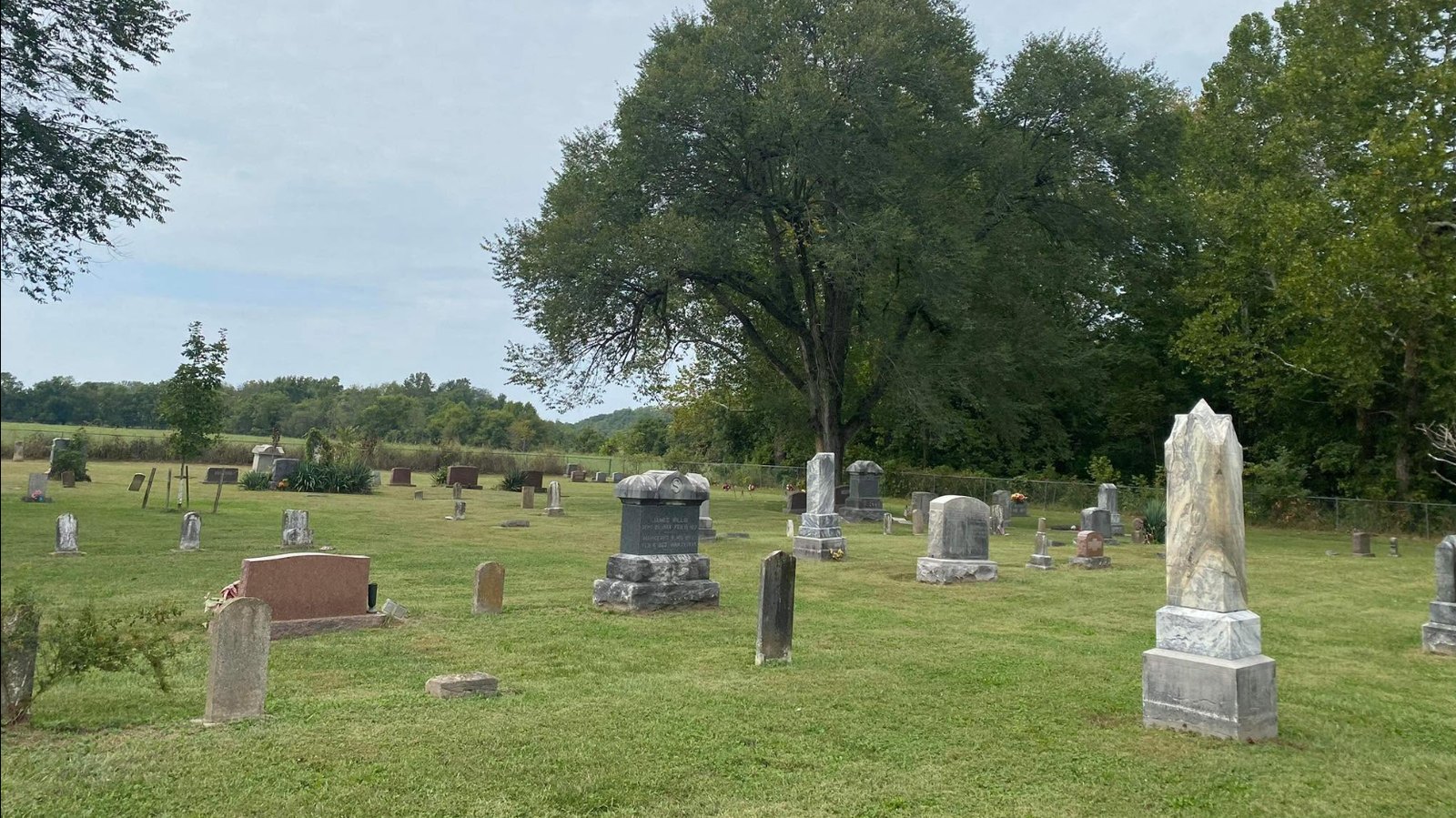
The deed
One dollar, and the word forever.
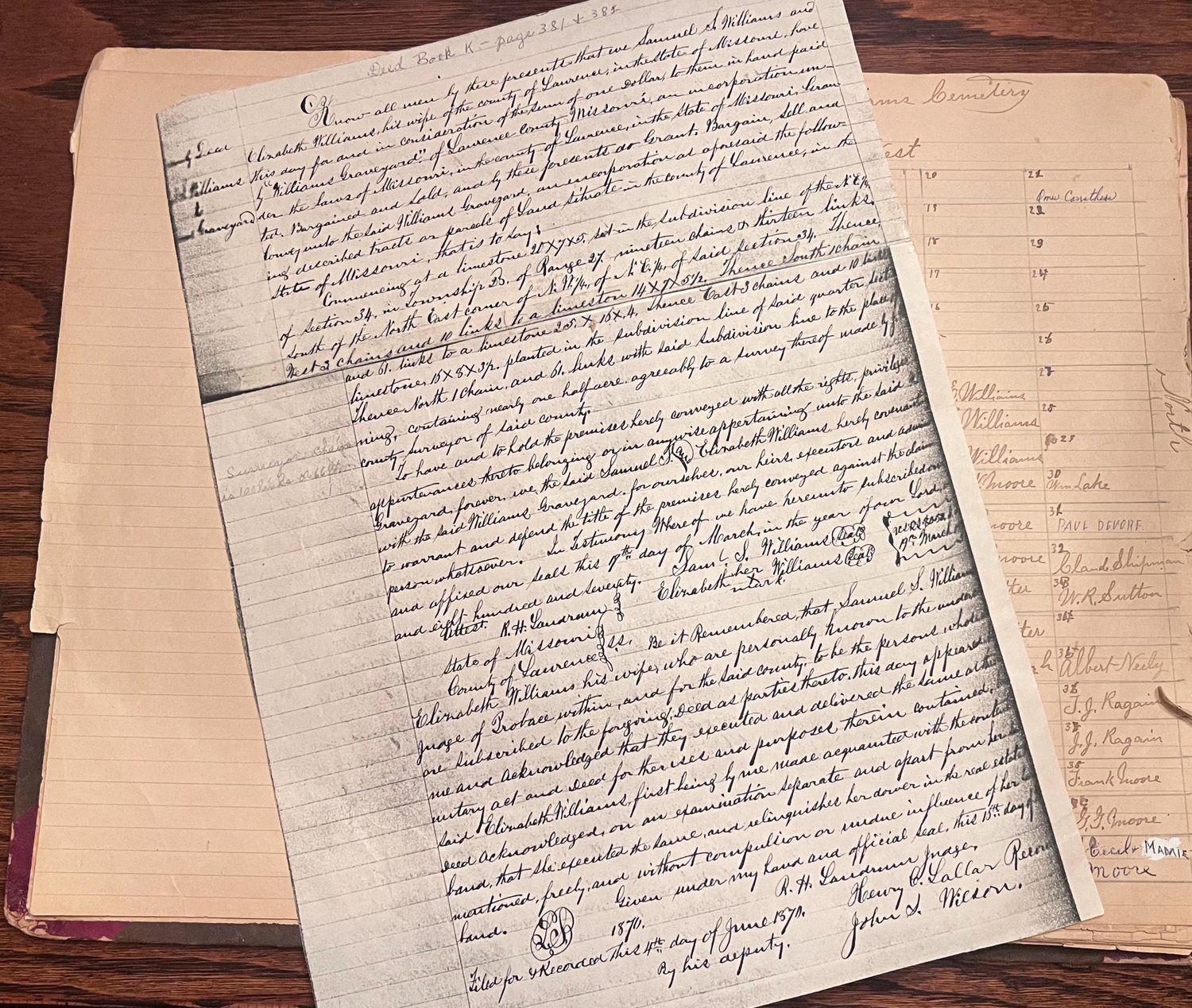
In March of 1870, Samuel S. Williams and his wife Elizabeth sold a piece of their farm to a corporation named for it. The consideration was one dollar. The buyer was “Williams Graveyard” of Lawrence County, Missouri, an incorporation under the laws of Missouri — which is to say they sold it to the thing itself, so that nobody would ever have to sell it again.
The survey begins at a limestone twenty inches by seven by five, set in the subdivision line of the northeast quarter of Section 34, nineteen chains and thirteen links south of the corner. From there it runs one chain south to a second limestone, three chains and ten links east, one chain north, and back to the beginning. Nearly one half acre. Somebody walked that with a chain and set stones in the ground to mark it.
The habendum is the ordinary formula and it is worth reading anyway: to have and to hold the premises hereby conveyed, with all the rights, privileges and appurtenances thereto belonging, unto the said Williams Graveyard forever.
Samuel Williams was buried in it five years later.
And it is larger now than the deed describes. Within the last ten years the Baugh family gave the ground alongside, bringing the half acre up to a full one — the second time in a hundred and fifty-odd years that a family farming next to this place has handed a piece of it over. The Baughs have been at this a while. S. B. Baugh signed the association's first minutes, as clerk, in 1900.
1887
Bring tools.
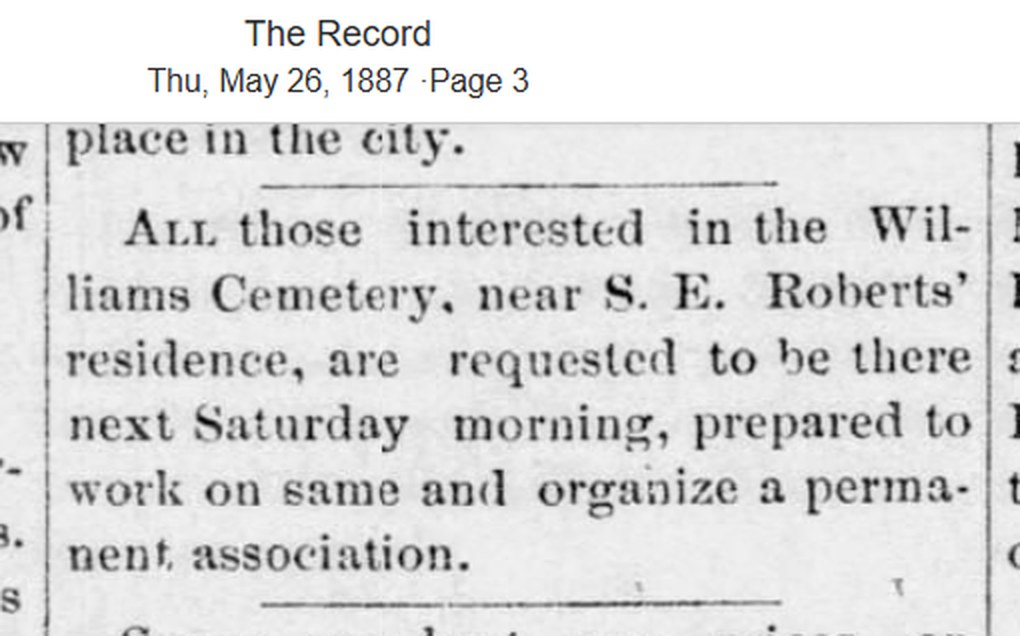
Seventeen years after the deed, the county paper ran four lines that say a great deal about how this was actually done:
All those interested in the Williams Cemetery, near S. E. Roberts' residence, are requested to be there next Saturday morning, prepared to work on same and organize a permanent association.
It took another thirteen years.
1900
Five directors and a book that cost fifty cents.
On the twenty-sixth of May, 1900, they elected five directors and told them to go organize themselves the same day. They did. W. O. Sutton, president. S. B. Baugh, clerk. Wm. Moore, superintendent and treasurer.
The business that first year was the business every year since. Tax the lot holders twenty-five cents. Let a contract to clean off the ground — six dollars, to Claud Baswell, that November. Collect what you can: J. E. Williamson brought in a dollar fifty, W. M. Baswell a dollar twenty-five, and the two-seventy-five went straight back out to Thomas Ragain for the cleaning.
And this, entered in the clerk's hand between the assessments and the contracts: Wm. Moore paid 50 cents for the book. The book he means is the one the sentence is written in.
The minutes run from that page to 1985 without a real break.
- Deeded
- March 9, 1870
- For
- One dollar
- Ground
- Half an acre, now one
- Association
- Organized 1900
Who is here
Mostly the same dozen families, for a hundred and fifty years.
The lot map reads like a roll call of the neighbourhood west of town, and the same surnames turn up in the minutes, the dues ledgers and the stones.
Baugh · Barger · Blumlee · Carothers · Castiller · DeVore · Dickinson · Ellis · Etter · Gullett · Haley · Hockett · Jennings · Knott · Lake · McDonald · Moore · Neely · Newman · Patrick · Ragain · Shelton · Shipman · Sutton · Waggoner · Williams · Williamson · Wood
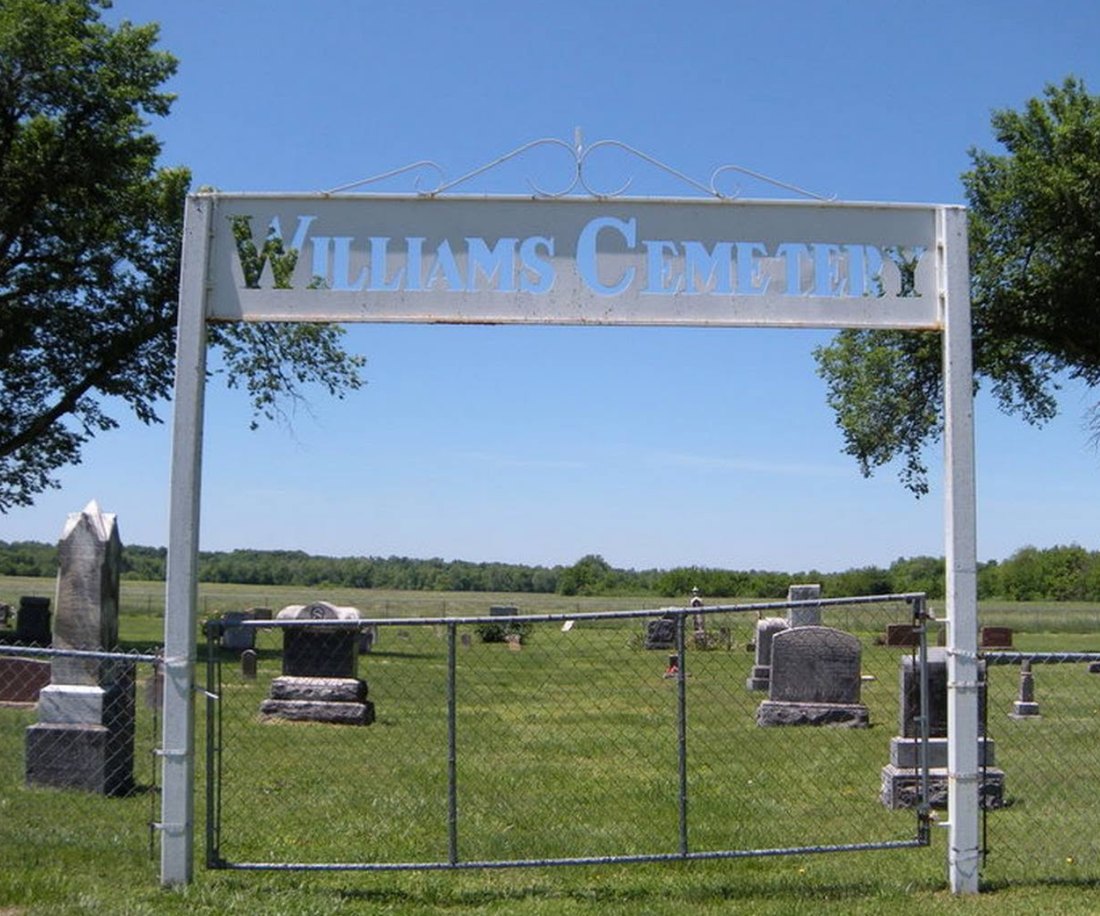
Some have a cut stone with dates on it. Some have a fieldstone. Some have a place in the row where a stone should be, and nothing on it — and part of the work now is figuring out who those are.
What is being written
The people, one at a time, with the records they can be checked against.
This site is being built. What is coming to it:
- The residents. A page for each person buried here — what the record actually says, where it disagrees with itself, and what is still missing. Written and posted a few a week.
- The log book. Eighty-five years of minutes, dues and Decoration Day, transcribed page by page and searchable.
- Non-fiction. Longer work drawn from all of it, in progress.
If you have people here, or photographs, or a family Bible with the dates in the front — those are exactly the things the record is missing, and we would like to hear from you.
The newsletter
Four letters a year, and nothing else.
When there is something worth reporting — a resident written up, a work day set, the log book further along, a book finished — it goes out quarterly. That is the whole of it.
Check your email.We have sent you a link to confirm. The list stays clean that way, and you will not hear from us until you click it.
One letter a quarter. Unsubscribe from any of them. Your address is not sold, shared, or used for anything else.
Keeping it up
Twenty-five cents a lot does not go as far as it used to.
In 1900 the whole year came to six dollars, raised a quarter at a time from the people who held lots. It now runs to something near three thousand a year, and for a good while it has been carried by two families.
The association is the same corporation Samuel and Elizabeth Williams sold the ground to in 1870, and the job has not changed either: keep it mown, keep the fence up, set the stones that have gone over. If you would like that to go on happening, there is a fund for it.
Or write to williamsgraveyardassociation@gmail.com.
Also
There is a novel set in this county.
It is fiction, its people are invented, and it is a separate thing from the work on this site — but it grew out of the same records and the same ground. It is at whatthehillskeep.com.